What’s With Wiki Wiki
Worms?
As you might gather from the name, Wiki Wiki Worm Ranch is
based in Hawaii, specifically the island of Kauai. Because of the HI
Agricultural Department’s strict rules regarding the importation and exportation
of live organisms, we don’t ship worms off-island or import them from the
mainland. Given that fines can range up to $25,000, we suggest that you be very
careful and check with the Ag Dept before transporting worms to and from HI.
Above and beyond that, Hawaii is a truly unique and delicate ecosystem that is
constantly under threat from invasive species and has more endangered species
of plants and animals per square mile than any other place on the planet!
Because of that, please respect the ‘aina and don’t take any chances that could
further threaten this beautiful paradise.
However, we think composting worms are amazing creatures and
highly encourage you to check into raising some of your own. There are worm
operations on all of the Hawaiian Islands as well as all over the Mainland and
we will happily direct you to a local source – please check our links page.
We hope that our web site will give you some general
guidance and advice, and if there are any questions we haven’t answered here,
please ask! Just go to the aptly named Contact page
and ask away. Although I’ve done a lot studying about worms and have
been raising them for quite a few years now, I don’t claim to be an expert….. it’s just my opinion – I could be wrong.
Having said all that, I want to stress that worms are REALLY EASY to raise and it doesn’t have to be complicated or hard to do. Just because a lot of worm geeks (like me) get excited and opinionated about esoteric concepts, or because there’s a lot of technical research to be had, doesn’t mean that you have to know all this stuff. You can still wear the cool worm rancher clothes and get admiring stares as you stride confidently down the street. Let’s face it, if you can toss some paper and worms in a box, then feed ‘em a little garbage, all while saving the planet, then YOU too can be part of the World Wide Web of Wiki Wiki Wormers.
Preparing a bin….
Composting worms are best kept in a bin or box, as this is a
much easier way to manage the worms and harvest the compost. The worm bin can
range from small and super-simple to huge and complex systems.
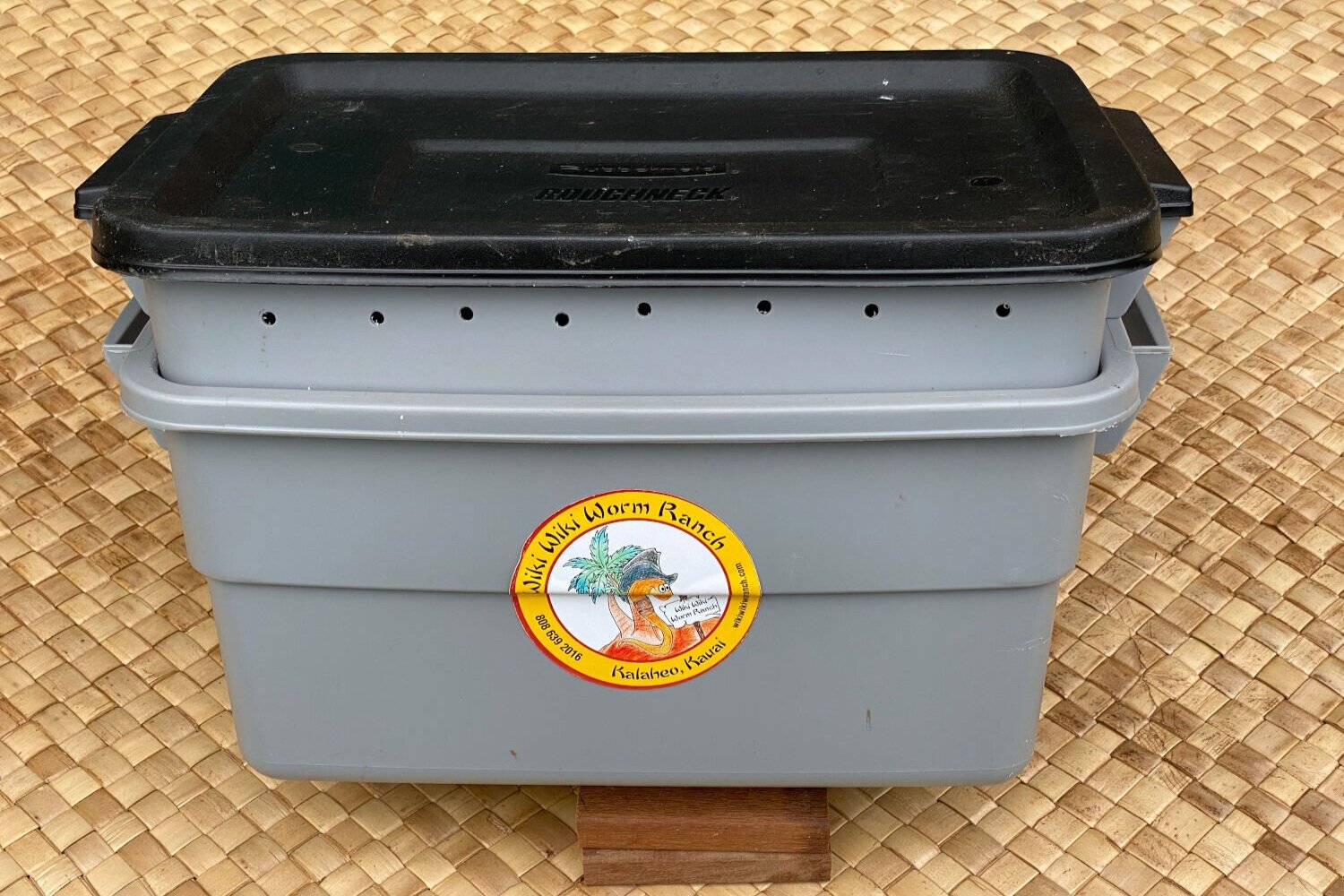
The easiest way to start is with a small to medium plastic
tote with a lid, preferably opaque (worms don’t like light), but clear will
also work. Using a ¼” drill bit, drill a bunch holes in the bottom of the bin
(for drainage) and a row of holes approximately an inch or two down from the
lid (for air circulation). Then fill the bin with shredded newspaper or junk
mail or straw (or whatever you have on hand) to use for bedding. The bedding
should be moistened with water until it’s thoroughly damp, like a wrung out
sponge. You should also mix in some dirt or garden soil or a little sand, since
the worms need a little grit to aid in digestion. That’s it! Just add worms and
put the lid on…..
From there, you can start adding some refinements, like a
drip tray underneath to catch the liquid (nest it in a second tote or use an
extra lid under it). Try adding some adding some well aged compost (it’ll contribute
micro-organisms that help break down the food) or perhaps some coir (shredded
coconut fiber), hau’upu or vermiculite, which will help keep the bedding
fluffed up and retain moisture. The worms will eventually eat the bedding, so
you’ll keep adding as you go along. The main things to remember about the worm
bin are Damp, Dark and Dinner, along with some air circulation to supply
oxygen.
As for location, you can keep it inside or out. A well
managed bin has virtually no smell and rarely any flies or other pests, so many
people keep it in the house or garage with no problem. If the thought of worms
in the house is not your cup of tea, outside is fine, just protect it from
extremes; avoid direct sunlight/heat and keep out of the rain.
Beyond the basic bin, there are probably as many different types of bins as there are worm ranchers.
What and How Do I Feed
Them?
They should be fine without added food for the first week or
so, while they get used to their new home. Then start adding small amounts of
kitchen scraps, either by burying it in the bedding or placing another layer of
moistened bedding on top (this will help prevent flies and odors). Wait until
you see that the worms are actively working on the food before adding more – DO
NOT OVERFEED, as this can cause the bin to become smelly and attract pests.
DO NOT feed them dairy or meat
products and avoid grease (i.e., don’t give them salad scraps with dressing on
it.)
They don’t like hot peppers,
garlic, onions, or anything too spicy; they’ll eat small amounts of citrus, but
don’t overload ‘em with a whole bunch of orange or lemon peels all at one time.
I’ve heard that papaya seed is too acidic, so you may want to avoid large
amounts of that also.
They could probably eat that stuff
eventually, but it will attract flies and other pests, and start to smell
pretty bad before the worms can eat it. Grains, like bread or rice, etc., are
fine, but add them in small amounts, as they will tend to get moldy if you put
in too much at once (this is also a factor to consider if you have allergies to
mold - it probably won’t hurt the worms, but it might bother you...)
When feeding, less is better when
starting out. Never add more than a quarter to half-inch deep layer of food at
a time, and don’t add more until you can see that the worms are well involved
into eating what’s already there. (You’ll see them crawling around when you
first take the cover off, and you’ll see evidence of the castings). After a
while, you’ll get a feel for how much your worms are eating and how often to
feed them.
For the first few weeks, you
should check on them every day or two to monitor moisture content (should be
like a damp sponge) and make sure the bottom container is not too full of
liquid. If things seem to be drying out too much, spray them with some water.
Usually just adding fruit and vegetables will add enough water to keep things
even. When the brown liquid begins to accumulate in the bottom container, pour
it off into a jar, mix it with some water and spray/mist it onto your plants -
they’ll love it!
By the same token, BE PATIENT and
don’t stir them up all the time. Don’t rip the bedding apart just to see ‘how
they’re doing’, since this will only disturb them and keep them from breeding
and otherwise doing their worm thing…..
|
|